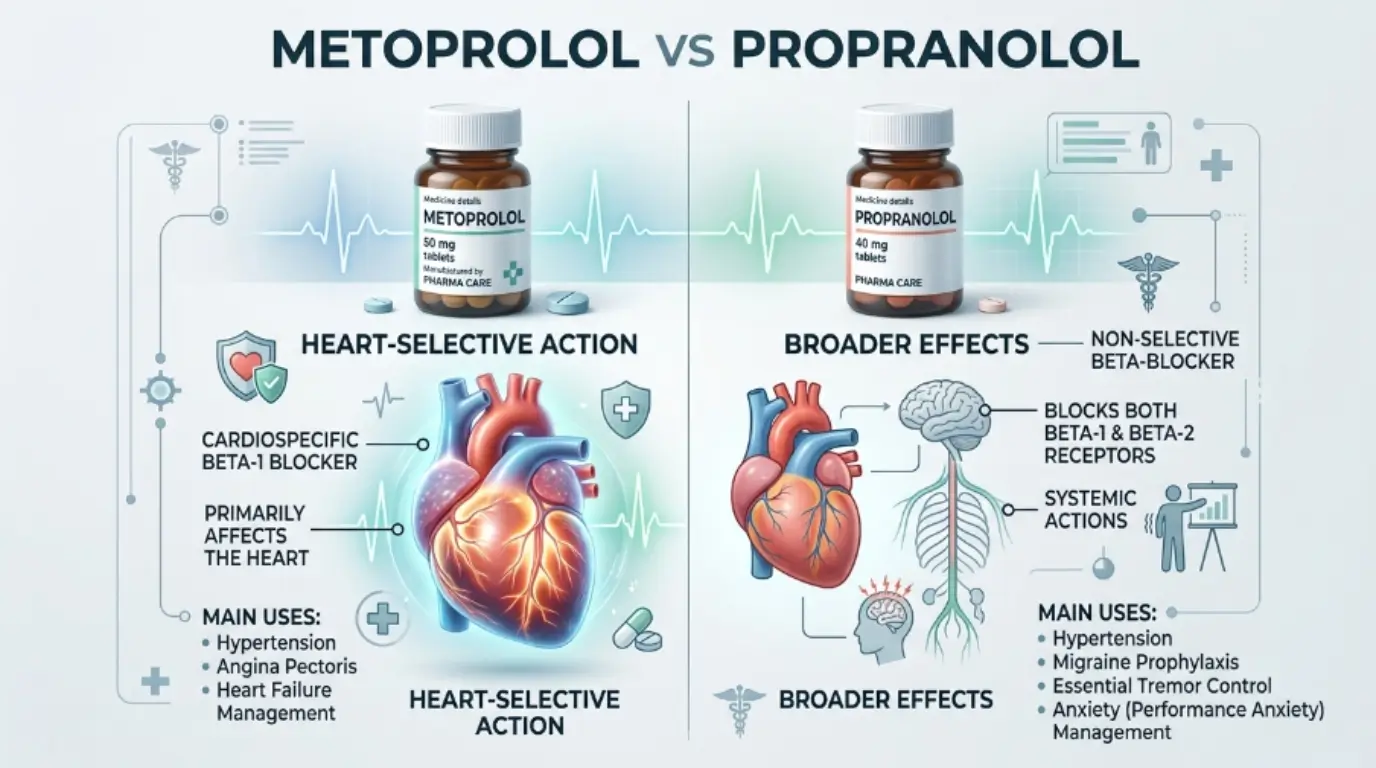
The difference between metoprolol and propranolol is a common topic among medical students, healthcare professionals, and patients who use beta-blocker medications.
Imagine two people visiting a doctor for heart-related concerns. One receives metoprolol for high blood pressure, while the other receives propranolol for migraine prevention and anxiety symptoms.
Although both medicines belong to the same family of drugs called beta-blockers, they work differently and are prescribed for different situations.
Understanding the difference between metoprolol and propranolol helps patients use medications safely and helps learners understand cardiovascular treatments more effectively.
The difference between metoprolol and propranolol also matters in emergency medicine, cardiology, and neurology because each medication affects the body differently.
In this article, we will explore the difference between metoprolol and propranolol in detail, including their uses, characteristics, similarities, and practical applications.
Key Difference Between Metoprolol and Propranolol
The primary difference is that metoprolol is a selective beta-1 blocker, while propranolol is a non-selective beta blocker.
- Metoprolol mainly affects the heart.
- Propranolol affects both the heart and other organs such as the lungs and blood vessels.
This difference influences how doctors choose the appropriate medication for specific medical conditions.
Why Is Their Difference Important to Know?
Understanding the difference between these medications is important because:
- Doctors must choose the safest medication for each patient.
- Patients with asthma may react differently to propranolol.
- Medical students need to understand selective and non-selective beta-blockers.
- Proper medication selection improves treatment outcomes.
- Healthcare providers can reduce side effects through informed prescribing.
Knowing these distinctions helps both beginners and experts make better healthcare decisions.
Pronunciation
Metoprolol
US: meh-TOE-pro-lol
UK: meh-TOH-pro-lol
Propranolol
US: proe-PRAN-oh-lol
UK: proh-PRAN-oh-lol
Now that we know how to pronounce these medications, let’s explore their detailed differences and similarities.
Difference Between Metoprolol and Propranolol
1. Selectivity
Metoprolol
Metoprolol selectively blocks beta-1 receptors found mainly in the heart.
Examples:
- Treating hypertension.
- Managing heart failure.
Propranolol
Propranolol blocks both beta-1 and beta-2 receptors.
Examples:
- Migraine prevention.
- Essential tremor treatment.
2. Effect on Lungs
Metoprolol
Usually has less effect on lung function.
Examples:
- Patient with mild asthma.
- Patient with COPD requiring a beta-blocker.
Propranolol
Can affect breathing due to beta-2 receptor blockade.
Examples:
- Asthma patient experiencing wheezing.
- COPD patient requiring careful monitoring.
3. Main Medical Uses
Metoprolol
Commonly used for cardiovascular conditions.
Examples:
- High blood pressure.
- Heart attack recovery.
Propranolol
Used for both heart and neurological conditions.
Examples:
- Migraine prevention.
- Performance anxiety.
4. Brain Penetration
Metoprolol
Moderate ability to enter the brain.
Examples:
- Heart rhythm management.
- Blood pressure control.
Propranolol
Readily crosses the blood-brain barrier.
Examples:
- Anxiety treatment.
- Tremor management.
5. Heart Failure Treatment
Metoprolol
Approved for certain heart failure patients.
Examples:
- Chronic heart failure.
- Reduced ejection fraction cases.
Propranolol
Not commonly used for heart failure.
Examples:
- Migraine patients.
- Anxiety patients.
6. Migraine Prevention
Metoprolol
Can help but is less commonly chosen.
Examples:
- Chronic migraine management.
- Preventive therapy.
Propranolol
Frequently prescribed for migraine prevention.
Examples:
- Recurring migraines.
- Long-term migraine control.
7. Anxiety Treatment
Metoprolol
Sometimes reduces physical symptoms.
Examples:
- Public speaking nervousness.
- Mild performance anxiety.
Propranolol
Widely used for performance anxiety.
Examples:
- Stage performances.
- Job interviews.
8. Duration of Action
Metoprolol
Available in extended-release formulations.
Examples:
- Once-daily dosing.
- Long-term blood pressure control.
Propranolol
Available in immediate and extended-release forms.
Examples:
- Multiple daily doses.
- Extended-release migraine treatment.
9. Effect on Blood Vessels
Metoprolol
Primarily affects cardiac activity.
Examples:
- Reduced heart rate.
- Lower blood pressure.
Propranolol
Influences wider body systems.
Examples:
- Reduced tremors.
- Migraine prevention.
10. Common Side Effects
Metoprolol
Examples:
- Fatigue.
- Dizziness.
Propranolol
Examples:
- Cold hands.
- Sleep disturbances.
Nature and Behaviour of Both Medications
Metoprolol
Metoprolol behaves as a heart-focused beta blocker. It mainly slows the heart rate and reduces the workload placed on the heart. Because of its selectivity, it is often preferred for patients with cardiovascular diseases.
Propranolol
Propranolol behaves as a broader-acting beta blocker. It affects the heart, blood vessels, and nervous system. This wider range of effects makes it useful for anxiety, migraines, and tremors.
Why Are People Confused About Their Use?
People often become confused because:
- Both belong to the beta-blocker class.
- Both lower heart rate and blood pressure.
- Their names sound similar.
- Doctors prescribe them for some overlapping conditions.
- Both can cause fatigue and dizziness.
However, their receptor selectivity and treatment purposes differ significantly.
Difference and Similarity Table
| Feature | Metoprolol | Propranolol |
| Drug Class | Beta Blocker | Beta Blocker |
| Selectivity | Beta-1 Selective | Non-Selective |
| Heart Failure Use | Common | Rare |
| Anxiety Use | Limited | Common |
| Migraine Prevention | Sometimes | Common |
| Asthma Safety | Better | Less Suitable |
| Brain Effects | Moderate | Strong |
| Blood Pressure Treatment | Yes | Yes |
| Heart Rate Reduction | Yes | Yes |
| Prescription Required | Yes | Yes |
Which Is Better in What Situation?
Metoprolol
Metoprolol is generally preferred when treating heart-related conditions such as hypertension, heart failure, and recovery after heart attacks. Its selective action on beta-1 receptors makes it a safer option for many patients with respiratory concerns.
Propranolol
Propranolol is often better for conditions involving the nervous system, including performance anxiety, migraines, and essential tremors. Its ability to affect both heart and brain-related symptoms gives it broader therapeutic uses.
Metaphors and Similes
Metoprolol
Metaphor: Metoprolol is the heart’s careful manager.
Simile: Metoprolol works like a traffic controller directing heart activity smoothly.
Propranolol
Metaphor: Propranolol is a multitasking coordinator for the body’s stress responses.
Simile: Propranolol works like a blanket covering several symptoms at once.
Connotative Meanings
| Word | Connotation |
| Metoprolol | Neutral to Positive |
| Propranolol | Neutral to Positive |
Examples
Positive:
- Metoprolol helped stabilize his heart condition.
- Propranolol helped her perform confidently on stage.
Neutral:
- The physician prescribed metoprolol.
- The doctor recommended propranolol.
Negative:
- Metoprolol caused temporary fatigue.
- Propranolol triggered breathing difficulties in a sensitive patient.
Idioms or Proverbs Related to Their Meaning
Although no specific idioms exist for these medication names, related expressions include:
- Slow and steady wins the race.
- Prevention is better than cure.
- An ounce of prevention is worth a pound of cure.
Examples
- Metoprolol demonstrates that slow and steady wins the race by reducing heart workload gradually.
- Propranolol shows that prevention is better than cure through migraine prevention.
Works in Literature Mentioning These Terms
Metoprolol
- Medical Pharmacology by Katzung (Medical Textbook, Multiple Editions)
- Harrison’s Principles of Internal Medicine (Medical Reference, Various Editions)
Propranolol
- Clinical Pharmacology Textbooks (Medical Literature)
- Neurology and Cardiology Journals (Various Years)
Movies Featuring These Keywords
No major commercial movies have been produced specifically about metoprolol or propranolol. However, both medications have appeared in medical documentaries and healthcare educational productions.
Frequently Asked Questions
1. Are metoprolol and propranolol the same?
No. Metoprolol is beta-1 selective, while propranolol is non-selective.
2. Which is better for anxiety?
Propranolol is commonly preferred for performance anxiety.
3. Which is safer for asthma patients?
Metoprolol is generally considered safer because it is more selective.
4. Can both lower blood pressure?
Yes. Both medications can reduce blood pressure and heart rate.
5. Can they be used for migraines?
Propranolol is more commonly prescribed for migraine prevention.
How Both Are Useful for Surroundings
Both medications contribute significantly to public health. They help reduce complications from heart disease, improve quality of life for patients, and decrease healthcare burdens.
Metoprolol supports cardiovascular health, while propranolol assists people with anxiety, migraines, and tremors.
Together, they represent important tools in modern medicine that help individuals remain productive and healthy.
Conclusion
Metoprolol and propranolol belong to the same family of beta blockers, yet they serve different purposes. The most important difference lies in their selectivity and range of action.
Metoprolol primarily focuses on heart-related conditions, while propranolol works across multiple body systems and is often chosen for anxiety, migraines, and tremors.
Understanding the difference between metoprolol and propranolol helps patients, students, and healthcare professionals make informed decisions.
Although they share similarities, each medication has unique strengths that make it valuable in specific situations.
Proper medical guidance is essential to determine which option best fits an individual’s needs.