Imagine you are starting a small business. Tax season arrives, and you realize taxes are more complex than expected. A friend suggests hiring a professional. Then you hear two titles: EA and CPA. Now the confusion begins. What is the difference between EA and CPA?
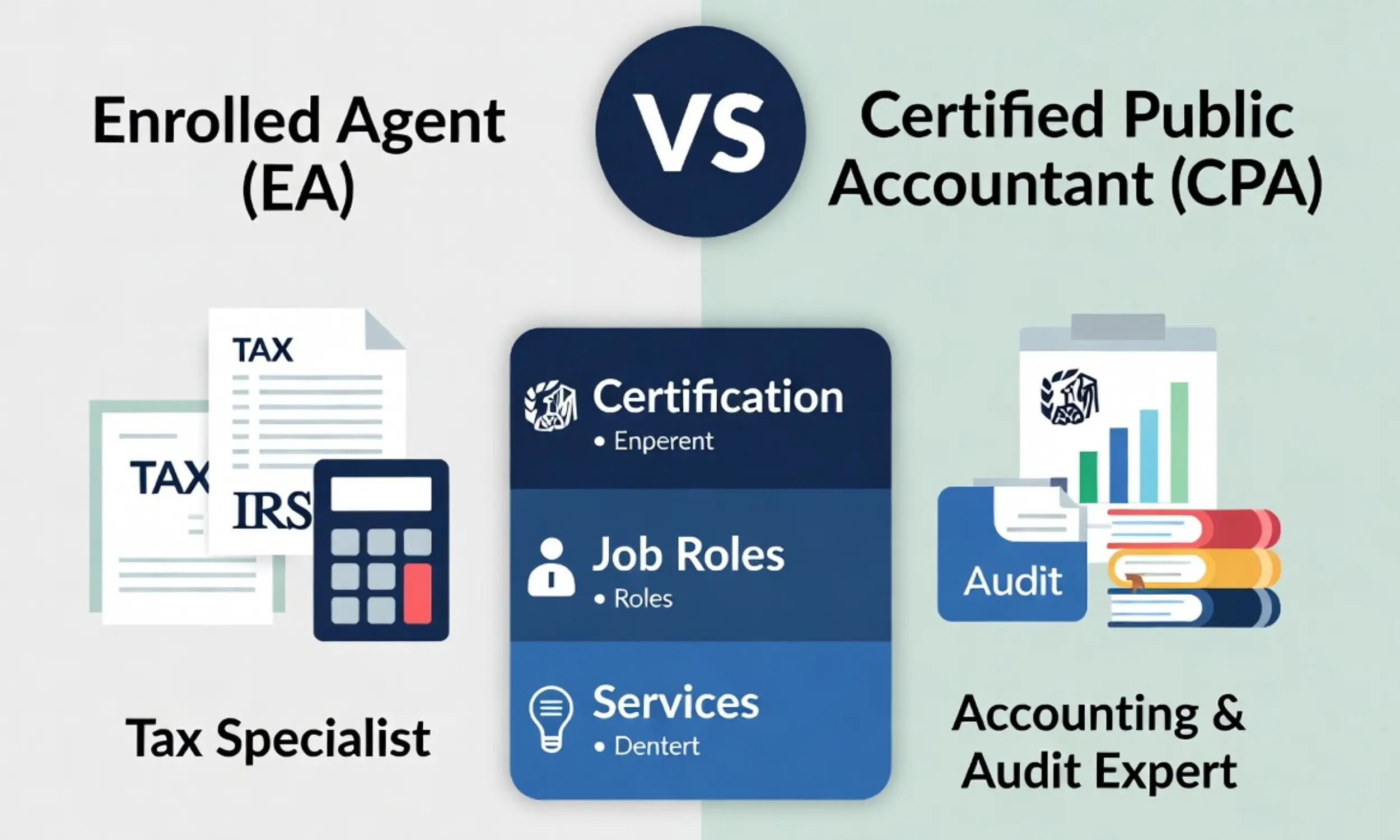
An Enrolled Agent (EA) is a tax expert authorized by the IRS to represent taxpayers. A Certified Public Accountant (CPA) is a licensed accounting professional who can handle accounting, auditing, and taxes. Both help people manage financial and tax matters, but their roles and training differ.
Understanding the difference between EA and CPA helps business owners, freelancers, and individuals choose the right professional. Some people need deep tax expertise, while others require broader financial services. That is why knowing the difference between EA and CPA is important before hiring a tax professional.
Key Difference Between EA and CPA
The main difference between EA and CPA lies in their certification and scope of work. EAs specialize mainly in taxes and IRS representation, while CPAs handle accounting, auditing, financial planning, and tax services.
Why Knowing This Difference Matters
Understanding this difference is important for both learners and professionals. Tax systems are complex, and people often need guidance to follow regulations. EAs play a major role in helping taxpayers resolve issues with the IRS. CPAs, on the other hand, help businesses manage finances, perform audits, and plan long-term financial strategies.
By knowing the difference between EA and CPA, individuals can select the right professional for tax preparation, financial reporting, or legal tax representation.
Pronunciation
- EA (Enrolled Agent)
- US: /ɪnˈroʊld ˈeɪdʒənt/
- UK: /ɪnˈrəʊld ˈeɪdʒənt/
- US: /ɪnˈroʊld ˈeɪdʒənt/
- CPA (Certified Public Accountant)
- US: /ˌsiː piː ˈeɪ/
- UK: /ˌsiː piː ˈeɪ/
- US: /ˌsiː piː ˈeɪ/
Before exploring deeper financial roles and responsibilities, let’s examine the detailed difference between EA and CPA step by step.
Difference Between EA and CPA
1. Certification Authority
EA: Enrolled Agents receive certification from the IRS.
Examples:
- An EA helps a freelancer resolve a tax audit with the IRS.
- An EA files complex tax returns for multiple clients.
CPA: CPAs receive licenses from state boards of accountancy.
Examples:
- A CPA audits a company’s financial records.
- A CPA prepares tax returns and financial statements for corporations.
2. Scope of Work
EA: Focuses mainly on taxation and IRS representation.
Examples:
- Advising a family on tax deductions.
- Representing a taxpayer during an IRS investigation.
CPA: Works in accounting, auditing, consulting, and tax planning.
Examples:
- Preparing a company’s annual financial report.
- Advising businesses on financial strategies.
3. Licensing System
EA: Federally authorized and can work in all U.S. states.
Examples:
- An EA in Texas helping a client in Florida.
- Providing tax help for remote clients nationwide.
CPA: Licensed by individual states.
Examples:
- A CPA licensed in California working mainly in that state.
- Obtaining multiple state licenses to serve different clients.
4. Education Requirements
EA: No specific degree required, but must pass the IRS Special Enrollment Examination.
Examples:
- A tax preparer studying for the EA exam.
- An experienced tax professional becoming an EA.
CPA: Usually requires a bachelor’s degree in accounting and passing the CPA exam.
Examples:
- A university graduate pursuing CPA certification.
- An accountant studying for the CPA licensing exam.
5. Examination Process
EA: Must pass a three-part IRS exam focused on tax law.
Examples:
- Studying federal taxation rules.
- Preparing for taxpayer representation questions.
CPA: Must pass a four-section CPA exam covering accounting and auditing.
Examples:
- Studying financial accounting standards.
- Preparing auditing case studies.
6. IRS Representation
EA: Has unlimited rights to represent taxpayers before the IRS.
Examples:
- Representing a client during an IRS audit.
- Negotiating tax payment plans.
CPA: Also has representation rights but focuses on broader financial services.
Examples:
- Helping with IRS audit responses.
- Advising on tax compliance for companies.
7. Professional Focus
EA: Specialized tax professionals.
Examples:
- Handling tax debt cases.
- Managing complex personal tax filings.
CPA: Broad financial professionals.
Examples:
- Auditing corporations.
- Providing business financial advice.
8. Work Environment
EA: Often works in tax firms or independently.
Examples:
- Running a tax preparation office.
- Consulting small businesses on tax planning.
CPA: Works in public accounting firms, corporations, or government.
Examples:
- Working in a large accounting firm.
- Managing finances in a corporation.
9. Continuing Education
EA: Must complete IRS-approved continuing education courses.
Examples:
- Updating tax knowledge annually.
- Attending tax law workshops.
CPA: Must meet state continuing education requirements.
Examples:
- Studying accounting standards updates.
- Taking professional accounting courses.
10. Career Opportunities
EA: Career focused on tax consulting and representation.
Examples:
- Tax resolution specialist.
- Independent tax advisor.
CPA: Career options include auditing, consulting, and finance.
Examples:
- Corporate accountant.
- Financial consultant.
Nature and Behaviour of Both
An EA is highly specialized in tax matters. Their role is focused and technical. They spend most of their time studying tax codes and representing taxpayers.
A CPA, however, has a broader professional nature. CPAs manage financial records, audits, consulting, and tax planning. Their role often involves working closely with businesses and financial institutions.
Why People Are Confused
People often confuse these titles because both EAs and CPAs handle taxes and help with IRS matters. Additionally, both professionals can prepare tax returns and represent clients before the IRS.
However, the confusion exists because CPAs have a wider accounting role, while EAs concentrate mainly on tax expertise.
Table: Difference and Similarity Between EA and CPA
| Feature | EA | CPA |
| Certification | IRS | State Board |
| Focus | Taxation | Accounting & Finance |
| Licensing | Federal | State |
| Education | Exam-based | Degree + Exam |
| Work Scope | Tax representation | Accounting, auditing, tax |
| Client Work | Tax issues | Business finance |
| Representation | IRS representation | IRS representation |
| Flexibility | Nationwide practice | State-based license |
Which Is Better in What Situation?
When EA Is Better
If someone has complicated tax problems, an EA may be the best choice. They specialize in tax law and IRS negotiations. Individuals with tax debt or audits often benefit from their expertise.
When CPA Is Better
If a business needs accounting, auditing, and financial planning, a CPA is usually the better option. CPAs offer broader financial guidance beyond tax filing.
Metaphors and Similes
- An EA is like a tax lawyer of the accounting world.
- A CPA is like a financial doctor for businesses.
Connotative Meanings
EA
- Positive: Tax expert
- Neutral: IRS representative
- Negative: Seen as limited to tax work
CPA
- Positive: Trusted financial professional
- Neutral: Accountant
- Negative: Sometimes perceived as expensive
Idioms and Proverbs
- “Mind your pennies and the dollars will take care of themselves.”
- “A good accountant saves more than they cost.”
- “Don’t count your chickens before they hatch.”
Example:
A CPA may remind clients not to count their chickens before they hatch when planning profits.
Works in Literature
- Accounting for Success – Business guide by Robert Half (Non-fiction, 2015)
- The Accounting Game – Darrell Mullis (Business education, 2008)
Movies Related to Accounting or Finance
- The Accountant (2016, USA)
- Margin Call (2011, USA)
Frequently Asked Questions
1. What is the main difference between EA and CPA?
The main difference is their certification and scope. EAs specialize in taxes, while CPAs provide broader accounting services.
2. Can an EA represent clients before the IRS?
Yes. EAs have full authority to represent taxpayers before the IRS.
3. Do CPAs only prepare taxes?
No. CPAs also perform audits, financial consulting, and business accounting.
4. Which professional is better for tax audits?
EAs are often preferred for tax audits because they specialize in tax law.
5. Are both EA and CPA respected professions?
Yes. Both roles are highly respected and play an important role in financial management.
How Both Are Useful for Society
EAs and CPAs both support financial stability in society. They help individuals pay taxes correctly, guide businesses in financial decisions, and ensure compliance with laws. Their expertise prevents financial mistakes and promotes economic transparency.
Conclusion
The difference between EA and CPA mainly depends on their certification, training, and scope of work. EAs focus deeply on tax law and IRS representation, while CPAs provide broader accounting, auditing, and financial consulting services.
Both professionals play important roles in the financial world. Choosing between them depends on your needs.
If you need help with taxes or IRS problems, an EA may be the best option. If you need accounting, auditing, or business financial advice, a CPA is usually the better choice.
Understanding the difference between EA and CPA helps individuals and businesses make smarter financial decisions and choose the right professional for their situation.