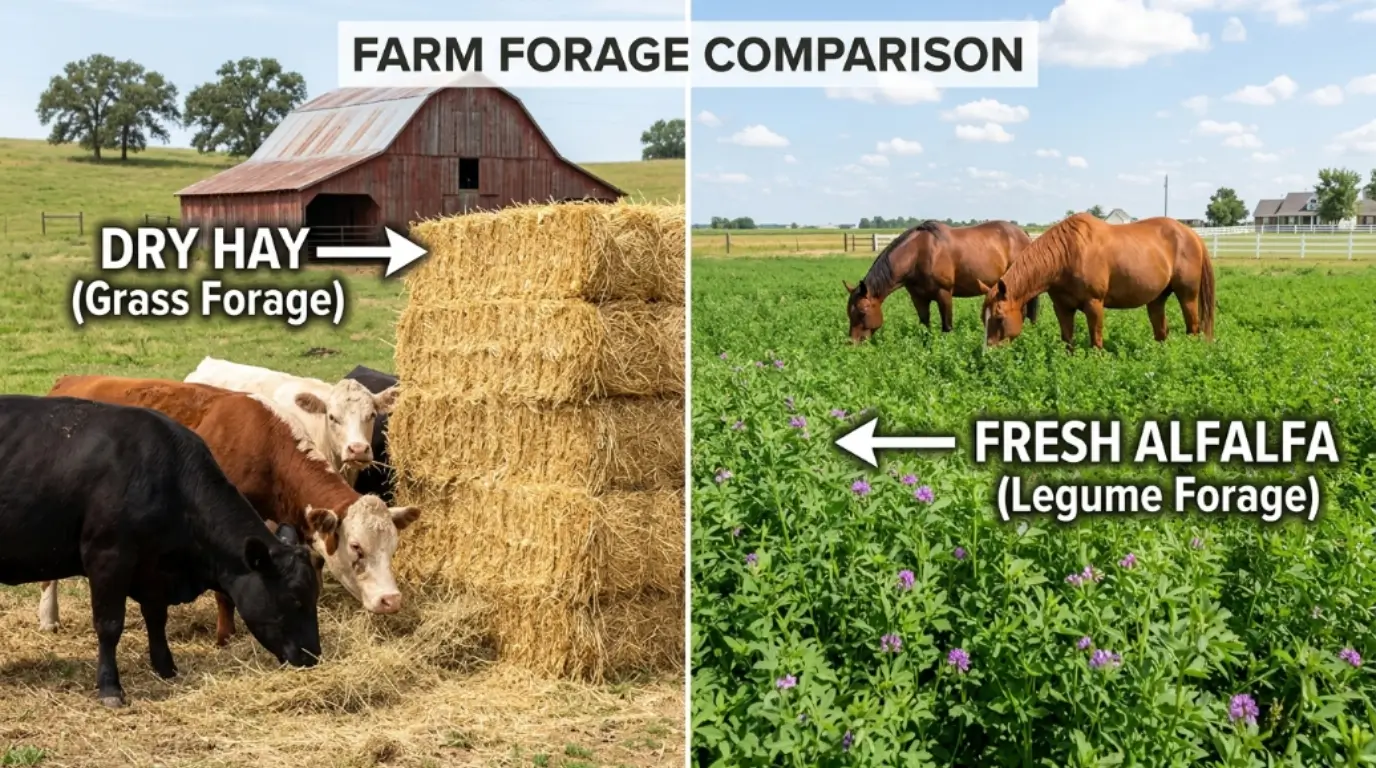
Farmers often stand in green fields deciding what feed is best for their animals. Some choose hay because it is simple, affordable, and easy to store.
Others prefer alfalfa because it is rich in nutrients and helps animals grow stronger. The difference between hay and alfalfa is important for farmers, pet owners, and even students learning about agriculture. While both are used as animal feed, they are not the same thing.
Hay is a broad term for dried grass or legumes, while alfalfa is a specific plant often used to make high-protein hay.
Understanding the difference between hay and alfalfa helps people make better feeding choices. Many people confuse them because alfalfa can also be called hay.
Learning the difference between hay and alfalfa can improve farming practices, animal health, and feeding costs in daily life.
Key Difference Between Hay and Alfalfa
The main difference is that hay is a general term for dried grasses or plants used as animal feed, while alfalfa is a specific type of legume plant often made into hay. Hay can come from many grasses, but alfalfa has higher protein and nutrition levels.
Why Is Their Difference Important to Know?
Knowing the difference is useful for both learners and farming experts. Farmers must choose the right feed for cows, horses, goats, and rabbits. Alfalfa is rich in nutrients and supports milk production and growth, while regular hay is better for balanced daily feeding. Students studying agriculture also need to understand these feeding materials because they affect farming economics, livestock health, and food production in society.
Pronunciation of Hay and Alfalfa
- Hay
- US Pronunciation: /heɪ/
- UK Pronunciation: /heɪ/
- Alfalfa
- US Pronunciation: /ælˈfælfə/
- UK Pronunciation: /ælˈfæl.fə/
Both words are common in farming discussions, but their meanings become clearer when we explore their differences in detail below.
Difference Between Hay and Alfalfa
1. Meaning
Hay:
Hay refers to dried grass, clover, or other plants stored as animal feed.
Examples:
- Farmers store hay for winter feeding.
- Horses commonly eat hay every day.
Alfalfa:
Alfalfa is a flowering legume plant rich in nutrients.
Examples:
- Dairy cows eat alfalfa for extra protein.
- Rabbits enjoy fresh alfalfa hay.
2. Nutritional Value
Hay:
Regular hay usually contains moderate nutrients.
Examples:
- Grass hay supports normal digestion.
- Timothy hay is lower in protein.
Alfalfa:
Alfalfa has high protein and calcium content.
Examples:
- Alfalfa helps young animals grow faster.
- It increases milk production in cows.
3. Plant Type
Hay:
Hay can come from different grasses or legumes.
Examples:
- Bermuda grass can become hay.
- Oat plants are also used for hay.
Alfalfa:
Alfalfa is only one specific plant species.
Examples:
- Alfalfa belongs to the legume family.
- It grows purple flowers in fields.
4. Color
Hay:
Hay is usually pale green, yellow, or golden.
Examples:
- Dry hay often looks light brown.
- Sun-dried hay turns golden.
Alfalfa:
Alfalfa is often greener because of its rich leaves.
Examples:
- Fresh alfalfa has a deep green shade.
- Quality alfalfa keeps its green color.
5. Protein Level
Hay:
Most hay types contain lower protein.
Examples:
- Grass hay suits adult horses.
- Hay keeps animals full without extra calories.
Alfalfa:
Alfalfa contains much higher protein.
Examples:
- Young calves benefit from alfalfa.
- Working animals gain energy from it.
6. Cost
Hay:
Regular hay is usually cheaper.
Examples:
- Grass hay is affordable for large farms.
- Farmers buy hay in bulk at low prices.
Alfalfa:
Alfalfa often costs more because of its nutrients.
Examples:
- Premium alfalfa bales are expensive.
- Dairy farms invest more in alfalfa.
7. Usage
Hay:
Hay is used for everyday feeding.
Examples:
- Horses eat hay throughout the year.
- Sheep survive winters on stored hay.
Alfalfa:
Alfalfa is mainly used for high-energy diets.
Examples:
- Racing horses eat alfalfa.
- Dairy cattle receive alfalfa supplements.
8. Digestibility
Hay:
Some hay types are harder to digest.
Examples:
- Older hay may become rough.
- Dry grass hay needs more chewing.
Alfalfa:
Alfalfa is softer and easier to digest.
Examples:
- Rabbits digest alfalfa quickly.
- Young goats enjoy tender alfalfa leaves.
9. Calcium Content
Hay:
Grass hay contains lower calcium.
Examples:
- Timothy hay has balanced minerals.
- Hay supports healthy digestion.
Alfalfa:
Alfalfa contains high calcium levels.
Examples:
- Pregnant animals need extra calcium.
- Alfalfa strengthens bones in young animals.
10. Farming Needs
Hay:
Hay crops need less maintenance.
Examples:
- Grass fields require simple care.
- Hay grows in many climates.
Alfalfa:
Alfalfa needs careful soil management.
Examples:
- Alfalfa grows best in fertile soil.
- Farmers monitor irrigation for alfalfa.
Nature and Behaviour of Both
Hay:
Hay is dry, fibrous, and mainly used for filling animal stomachs and supporting digestion. It is simple, practical, and widely available.
Alfalfa:
Alfalfa is nutrient-rich, leafy, and softer. It supports rapid growth and high energy needs in animals.
Why Are People Confused About Their Use?
People often think hay and alfalfa are completely different products. The confusion happens because alfalfa itself can be turned into hay. In simple words, all alfalfa hay is hay, but not all hay is alfalfa. Stores also label products differently, which makes buyers unsure about what they are purchasing.
Difference and Similarity Table
| Feature | Hay | Alfalfa | Similarity |
| Meaning | Dried grass or plants | Specific legume plant | Both feed animals |
| Protein | Lower | Higher | Both provide nutrition |
| Cost | Cheaper | More expensive | Both sold in bales |
| Calcium | Moderate | High | Both contain minerals |
| Digestibility | Moderate | Easier | Both aid digestion |
| Color | Yellow or pale green | Deep green | Both are dried crops |
| Use | Daily feeding | High-energy diets | Both used on farms |
| Plant Type | Many plant types | One plant species | Both are agricultural crops |
Which Is Better in Different Situations?
Hay is better for animals needing a balanced and lower-calorie diet. Adult horses, sheep, and goats often benefit from grass hay because it supports digestion without too much protein. Hay is also better for farmers who want affordable feed in large amounts.
Alfalfa is better for growing animals, dairy cows, and animals needing extra energy. Its high protein and calcium levels help increase growth, strength, and milk production. However, too much alfalfa may not suit every animal because of its rich nutrient content.
Hay and Alfalfa in Metaphors and Similes
Hay
- “Making hay while the sun shines” means using opportunities wisely.
- “Dry as hay” describes something extremely dry.
Alfalfa
- “Healthy as alfalfa” can describe someone strong and energetic.
- “Green like alfalfa” may describe freshness or growth.
Connotative Meanings
Hay
- Positive: Simplicity, survival, hard work
- Negative: Dryness, roughness
- Neutral: Farm feed
Examples:
- “The barn smelled of fresh hay.”
- “His joke was old as dry hay.”
Alfalfa
- Positive: Strength, nutrition, growth
- Negative: Expensive feeding option
- Neutral: Legume crop
Examples:
- “The cows became healthier with alfalfa.”
- “Alfalfa feed increased farm costs.”
Idioms and Proverbs
- “Make hay while the sun shines.”
- Example: She completed her studies early and made hay while the sun shines.
- “Hit the hay.”
- Example: After farming all day, they decided to hit the hay early.
Works in Literature
Hay
- Hay for My Ox — by H.E. Bates (Poetry, 1935)
- Make Hay While the Sun Shines — by H.V. Morton (Travel Writing, 1935)
Alfalfa
- Alfalfa Farming in America — agricultural literature and manuals from the early 1900s
- The Alfalfa Princess — rural fiction references in American farm stories
Movies Related to Hay or Alfalfa
Hay
- Hayride (2012, USA)
- The Hayseed (1919, USA)
Alfalfa
- The Little Rascals featuring character “Alfalfa” (1994, USA)
- Alfalfa’s Double (1916, USA)
Frequently Asked Questions
1. Is alfalfa a type of hay?
Yes, alfalfa can be made into hay, but hay can also come from many other plants.
2. Which is healthier for animals?
Alfalfa is healthier for growing or dairy animals because it contains more nutrients.
3. Why is alfalfa more expensive?
It costs more because it has higher protein and calcium content.
4. Can horses eat alfalfa daily?
Some horses can, but too much alfalfa may provide excess protein and energy.
5. What is the biggest difference between hay and alfalfa?
Hay is a general feed category, while alfalfa is a specific nutrient-rich plant.
How Both Are Useful for Surroundings
Hay helps farmers store food for animals during dry seasons and winters. It also reduces waste by preserving grasses for future use. Alfalfa improves soil fertility because it adds nitrogen to the ground naturally. Both crops support livestock farming, food production, and sustainable agriculture in many countries.
Conclusion
The difference between hay and alfalfa is simple but very important in farming and animal care. Hay is a broad term for dried plants used as feed, while alfalfa is a specific high-protein legume often turned into hay.
Both are valuable, but they serve different purposes depending on the animal’s nutritional needs. Hay is affordable and ideal for regular feeding, while alfalfa supports growth, energy, and milk production.
Understanding the difference between hay and alfalfa helps farmers, students, and pet owners make smarter feeding decisions.
When used correctly, both contribute to healthier animals, stronger farms, and better agricultural practices around the world.