Last Sunday, Ali checked the weather before going to the market. The app said “scattered showers.” He ignored it.
On the way, light rain started for five minutes and then stopped. Later, the sky became dark and steady rain poured for hours. That day, he finally understood the difference between showers and rain.
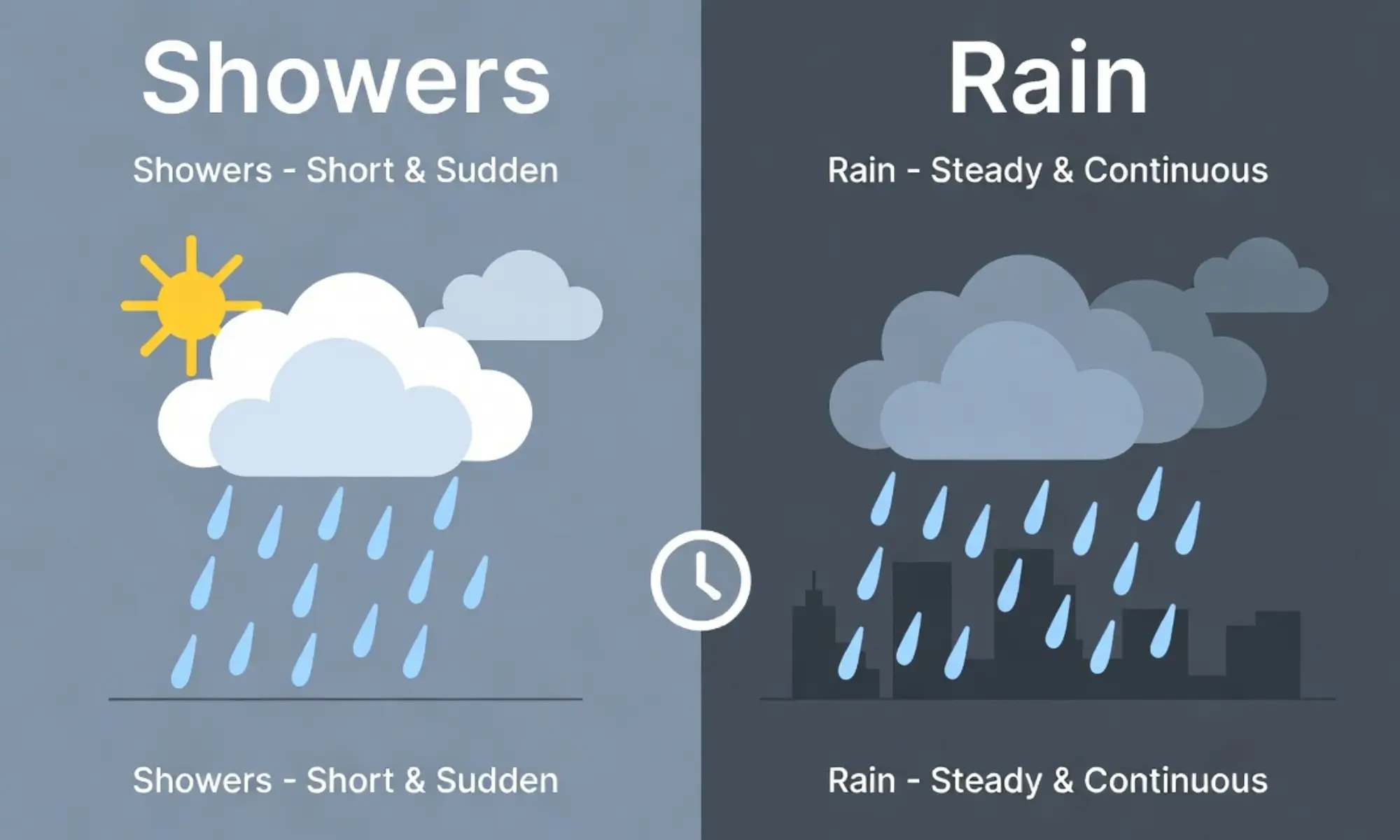
Rain is water that falls from clouds in a steady and continuous way. Showers are short bursts of rain that start and stop suddenly.
Many people do not understand the difference between showers and rain, so they get confused while planning trips or events.
Knowing the difference between showers and rain helps farmers, travelers, students, and weather experts. In daily life, the difference between showers and rain can save time and trouble.
Before we explore deeper, let us first understand their sound and usage.
Pronunciation (US & UK)
- Showers
- US: /ˈʃaʊ.ɚz/
- UK: /ˈʃaʊ.əz/
- US: /ˈʃaʊ.ɚz/
- Rain
- US: /reɪn/
- UK: /reɪn/
- US: /reɪn/
Key Difference Between the Both
The key difference is duration and pattern.
- Showers are short, sudden, and uneven.
- Rain is steady, continuous, and widespread.
Why Is Their Difference Necessary to Know for Learners and Experts?
Understanding this difference is important in society. Farmers need to know if water will last long. Event planners must decide if outdoor programs are safe. Pilots and drivers rely on weather reports.
Students studying geography and climate science must clearly understand this difference. Weather experts use the correct term to give accurate forecasts. If people misunderstand the terms, they may not prepare properly. So, this knowledge improves safety and planning.
Now, let us explore the main differences in detail.
Difference Between Showers and Rain
Below are 10 clear differences explained simply.
1. Duration
- Showers last for a short time.
- Example 1: A 10-minute sudden rainfall.
- Example 2: Quick rain during afternoon heat.
- Example 1: A 10-minute sudden rainfall.
- Rain lasts longer.
- Example 1: Rain falling all night.
- Example 2: Continuous rainfall for three hours.
- Example 1: Rain falling all night.
2. Intensity
- Showers can be light or heavy but brief.
- Example 1: Sudden heavy splash.
- Example 2: Light quick drizzle.
- Example 1: Sudden heavy splash.
- Rain is more stable in strength.
- Example 1: Medium steady rainfall.
- Example 2: Long heavy downpour.
- Example 1: Medium steady rainfall.
3. Cloud Type
- Showers often come from cumulus clouds.
- Example 1: Puffy clouds in summer.
- Example 2: Storm clouds forming quickly.
- Example 1: Puffy clouds in summer.
- Rain often comes from nimbostratus clouds.
- Example 1: Thick gray sky all day.
- Example 2: Wide dark cloud cover.
- Example 1: Thick gray sky all day.
4. Predictability
- Showers are less predictable.
- Example 1: Sunshine then sudden rain.
- Example 2: Rain only in one street.
- Example 1: Sunshine then sudden rain.
- Rain is easier to predict.
- Example 1: Forecasted rainy day.
- Example 2: Weather warning for long rain.
- Example 1: Forecasted rainy day.
5. Area Coverage
- Showers affect small areas.
- Example 1: Rain in one village only.
- Example 2: One side of the city wet.
- Example 1: Rain in one village only.
- Rain covers wide areas.
- Example 1: Entire city raining.
- Example 2: Whole region under rain.
- Example 1: Entire city raining.
6. Sky Appearance
- Showers show broken clouds.
- Example 1: Blue sky between clouds.
- Example 2: Mixed sun and rain.
- Example 1: Blue sky between clouds.
- Rain shows fully covered sky.
- Example 1: Dark sky all day.
- Example 2: No sunshine visible.
- Example 1: Dark sky all day.
7. Seasonal Occurrence
- Showers common in spring and summer.
- Example 1: April showers.
- Example 2: Tropical afternoon showers.
- Example 1: April showers.
- Rain common in monsoon or winter.
- Example 1: Monsoon rains.
- Example 2: Winter rainstorms.
- Example 1: Monsoon rains.
8. Impact on Travel
- Showers cause short delays.
- Example 1: Waiting 15 minutes.
- Example 2: Light traffic slowdown.
- Example 1: Waiting 15 minutes.
- Rain causes long disruptions.
- Example 1: Flooded roads.
- Example 2: Flight delays.
- Example 1: Flooded roads.
9. Sound
- Showers sound sudden and sharp.
- Example 1: Fast tapping noise.
- Example 2: Loud short splash.
- Example 1: Fast tapping noise.
- Rain sounds steady.
- Example 1: Continuous soft sound.
- Example 2: Calm rhythmic drops.
- Example 1: Continuous soft sound.
10. Weather Forecast Term
- Showers mean on-and-off rain.
- Example 1: “Scattered showers” forecast.
- Example 2: “Isolated showers” warning.
- Example 1: “Scattered showers” forecast.
- Rain means continuous rainfall.
- Example 1: “Heavy rain expected.”
- Example 2: “Rain throughout the day.”
- Example 1: “Heavy rain expected.”
Nature and Behaviour
Showers behave suddenly. They start quickly and stop quickly.
Rain behaves steadily. It continues for a longer time.
Why Are People Confused?
Both involve water falling from clouds. Weather apps use similar symbols. People think all falling water is simply rain. That causes confusion.
Table: Difference and Similarity
| Aspect | Showers | Rain | Similarity |
| Duration | Short | Long | Both involve water |
| Area | Small | Wide | Both fall from clouds |
| Intensity | Sudden | Steady | Both affect travel |
| Cloud Type | Cumulus | Nimbostratus | Part of weather system |
| Predictability | Less | More | Both in forecasts |
Which Is Better in What Situation?
Showers are better in hot weather.
Short showers cool the air quickly. They reduce heat without causing floods. Farmers may benefit from light showers for crops. Outdoor events can continue after a short delay. Showers refresh the environment without long damage.
Rain is better for water supply.
Long steady rain fills rivers, lakes, and dams. It supports agriculture and drinking water supply. In dry regions, steady rain is important. However, too much rain may cause floods. Balanced rain is helpful for society.
Metaphors and Similes
- “Her tears fell like showers.”
- “The news came down like heavy rain.”
- “Opportunities rain on the lucky.”
Connotative Meaning
Showers – Often positive and refreshing.
- Positive: “Spring showers bring fresh flowers.”
- Neutral: “Light showers today.”
Rain – Can be positive or negative.
- Positive: “Rain brings life.”
- Negative: “Rain ruined the picnic.”
Idioms and Proverbs
- “Save for a rainy day.” (Prepare for hard times.)
- “It never rains but it pours.” (Problems come together.)
- “Come rain or shine.” (No matter the weather.)
Example: I will attend the event, come rain or shine.
Works in Literature
- A Farewell to Arms – Ernest Hemingway (Novel, 1929)
- The Rainy Day – Henry Wadsworth Longfellow (Poem, 1842)
Movies Related to Rain
- Singin’ in the Rain (1952, USA)
- Hard Rain (1998, USA)
Five Frequently Asked Questions
1. Are showers the same as rain?
No. Showers are short. Rain is steady and longer.
2. Do showers cause floods?
Usually no, unless very heavy.
3. Which is stronger?
Both can be strong, but rain lasts longer.
4. Why does forecast say scattered showers?
It means rain in some areas, not all.
5. Is drizzle a shower?
Drizzle is very light rain, not exactly a shower.
How Both Are Useful for Surroundings
Showers cool the air and clean dust.
Rain fills water sources and supports farming.
Both are essential for life on Earth.
Final Words for Both
Showers refresh quickly. Rain nourishes deeply. Both play different but important roles in weather and life.
Conclusion
The difference between showers and rain is mainly about duration, coverage, and pattern. Showers are short and sudden, while rain is steady and long-lasting.
Many people confuse them because both involve falling water from clouds. However, knowing their difference helps in planning, farming, traveling, and studying weather science.
Both have unique roles in nature and society. Understanding them makes us more aware of our environment and better prepared for daily life.