Imagine a graphic designer named Ali working late at night on a client project. He downloads a beautiful font but sees two options: TTF and OTF. Confused, he wonders about the difference between TTF and OTF and which one to choose.
Like Ali, many beginners and even professionals face this confusion daily. The difference between TTF and OTF lies in how these font formats are built and used across platforms. Understanding the difference between TTF and OTF can save time, improve design quality, and ensure compatibility.
Whether you’re a student, designer, or developer, knowing the difference between TTF and OTF helps you make smarter decisions.
In this guide, we will break down everything in a simple and easy way so you never get confused again.
Key Difference Between TTF and OTF
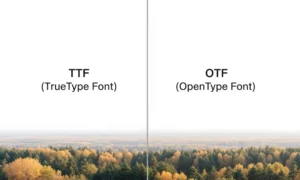
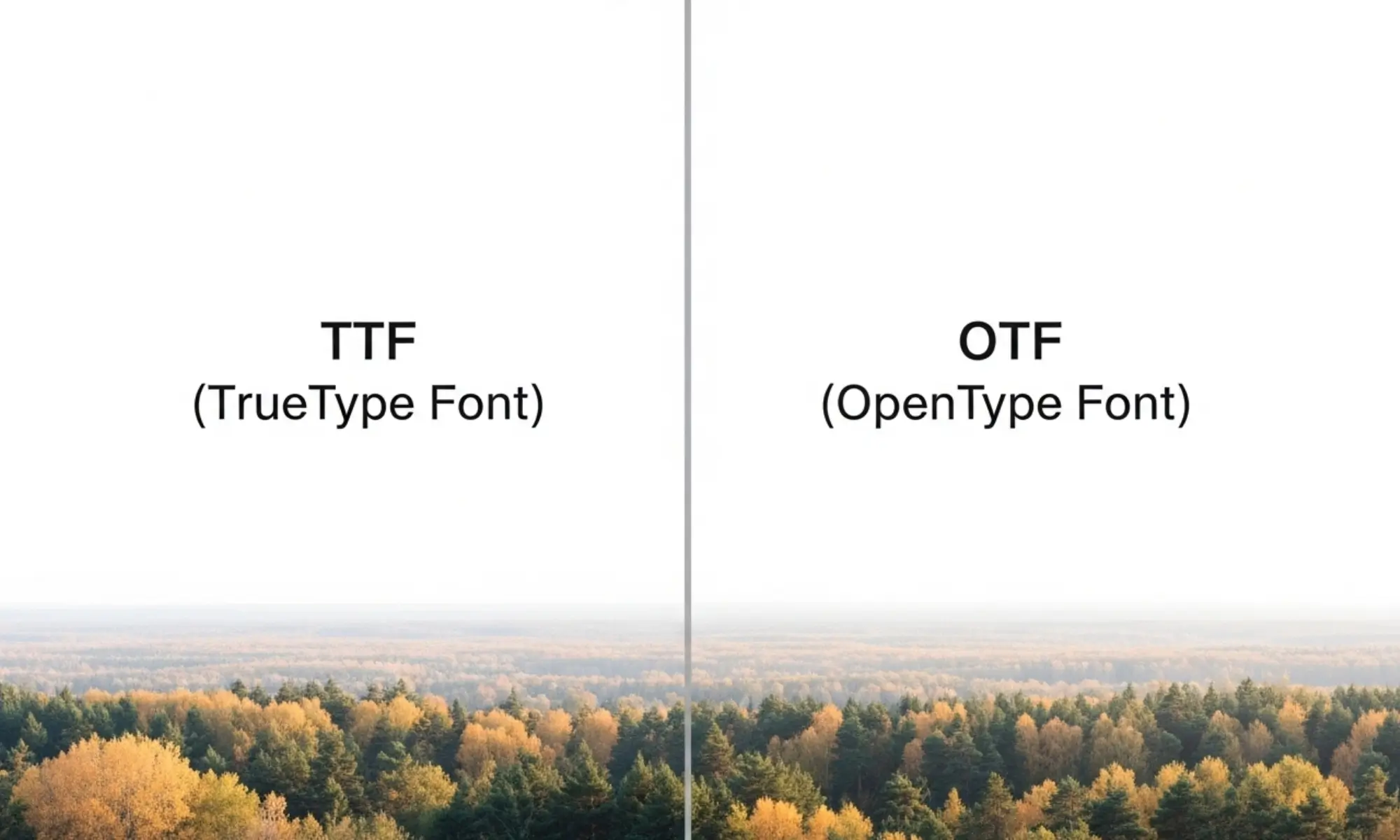
- TTF (TrueType Font): Simpler format, developed earlier, widely compatible.
- OTF (OpenType Font): Advanced format, includes extra features like ligatures and glyphs.
Why Is Their Difference Important?
Understanding the difference between TTF and OTF is important for both learners and experts. Designers use fonts to create visually appealing content, while developers ensure fonts work smoothly on websites and apps. Choosing the wrong format can affect design quality, loading speed, and compatibility. In society, where digital content is everywhere, fonts play a huge role in communication, branding, and user experience. Knowing the right format helps improve creativity and professionalism.
Pronunciation
- TTF (US): /ˌtiː tiː ˈɛf/ | (UK): /ˌtiː tiː ˈɛf/
- OTF (US): /ˌoʊ tiː ˈɛf/ | (UK): /ˌəʊ tiː ˈɛf/
Now that you understand the basics, let’s explore the detailed comparison.
Difference Between TTF and OTF
1. Font Structure
- TTF: Uses quadratic curves.
- Example: Simple fonts like Arial often use TTF.
- Example: Works well in basic text editors.
- OTF: Uses cubic Bézier curves.
- Example: Adobe fonts often use OTF.
- Example: Provides smoother shapes in design software.
2. Advanced Features
- TTF: Limited typographic features.
- Example: Basic bold and italic styles.
- Example: No automatic ligatures.
- OTF: Rich typographic features.
- Example: Supports ligatures like “fi”.
- Example: Includes alternate characters.
3. File Size
- TTF: Slightly larger file size.
- Example: Takes more space in bulk font libraries.
- Example: Slower loading on websites sometimes.
- OTF: More optimized and compact.
- Example: Better for web performance.
- Example: Faster loading in modern apps.
4. Compatibility
- TTF: Works on almost all systems.
- Example: Supported in older Windows versions.
- Example: Works on basic mobile apps.
- OTF: Best for modern systems.
- Example: Works perfectly with Adobe tools.
- Example: Preferred in advanced design apps.
5. Usage Purpose
- TTF: Ideal for general use.
- Example: School documents.
- Example: Basic website text.
- OTF: Ideal for professional design.
- Example: Branding projects.
- Example: Typography-heavy designs.
6. Development History
- TTF: Developed by Apple and Microsoft.
- Example: Early computer fonts.
- Example: Used in old operating systems.
- OTF: Developed by Adobe and Microsoft.
- Example: Modern font technology.
- Example: Used in creative industries.
7. Glyph Support
- TTF: Limited glyphs.
- Example: Few special characters.
- Example: Limited language support.
- OTF: Extended glyph set.
- Example: Multiple language support.
- Example: Decorative symbols included.
8. Printing Quality
- TTF: Good for normal printing.
- Example: Office documents.
- Example: School assignments.
- OTF: Excellent for high-quality printing.
- Example: Magazines.
- Example: Posters and branding.
9. Flexibility
- TTF: Less flexible.
- Example: Limited styling options.
- Example: Fixed character shapes.
- OTF: Highly flexible.
- Example: Alternate styles available.
- Example: Custom typography possible.
10. Web Usage
- TTF: Supported but not optimized.
- Example: Basic web fonts.
- Example: Slower rendering sometimes.
- OTF: Better for modern web use.
- Example: Smooth rendering.
- Example: Better user experience.
Nature and Behavior
- TTF: Simple, reliable, beginner-friendly.
- OTF: Advanced, feature-rich, professional.
Why People Are Confused
Both formats look similar and work in most systems, so users assume they are the same. The technical differences are hidden, which creates confusion.
Comparison Table
| Feature | TTF | OTF | Similarity |
| Structure | Quadratic curves | Cubic curves | Both are font formats |
| Features | Basic | Advanced | Used in design |
| Compatibility | High | Modern systems | Work on computers |
| File Size | Larger | Smaller | Digital files |
| Usage | General | Professional | Text display |
Which Is Better in What Situation?
TTF is better for beginners, students, and everyday users. It is simple, widely supported, and easy to use. If you just need fonts for documents or basic design, TTF is enough.
OTF is better for designers and professionals. It offers more features, better quality, and advanced typography options. If you want creative control and high-quality output, OTF is the right choice.
Metaphors, Similes, and Connotations
- Metaphor: “TTF is like a basic toolkit, while OTF is a full professional kit.”
- Simile: “OTF works like a designer’s dream.”
Connotations:
- TTF: Neutral to positive (simple, reliable)
- OTF: Positive (advanced, creative)
Idioms / Expressions
- “Simple is best” – relates to TTF usage.
- “Go the extra mile” – relates to OTF features.
Works in Literature (Related Themes)
- The Design of Everyday Things – Non-fiction, Don Norman, 1988
- Steal Like an Artist – Creativity, Austin Kleon, 2012
Movies Related to Design & Typography
- Helvetica – 2007, USA
- Abstract: The Art of Design – 2017, USA
FAQs
1. What is the main difference between TTF and OTF?
OTF has advanced features, while TTF is simpler.
2. Which format is better for beginners?
TTF is easier to use.
3. Is OTF better for design?
Yes, it offers more creative options.
4. Can both be used on websites?
Yes, but OTF is more optimized.
5. Are they useful in daily life?
Yes, both help in communication, design, and digital content creation.
Conclusion
The difference between TTF and OTF may seem small at first, but it has a big impact on design and usability.
TTF is simple, reliable, and perfect for everyday tasks, while OTF offers advanced features for professional work. Understanding their differences helps you choose the right format based on your needs.
Whether you are creating documents or designing creative projects, both formats have their place. By knowing when to use each, you can improve your workflow, enhance design quality, and make smarter decisions in the digital world.