Last week, I met a friend who looked fresher and more confident than ever. When I asked her secret, she smiled and said it was just a little help from fillers and Botox. That moment made me realize how many people hear about these treatments but don’t fully understand them.
The difference between fillers and Botox is often confusing, even though both are widely used in beauty and skincare.
The difference between fillers and Botox lies in how they work, what they treat, and the results they give. While both aim to reduce signs of aging, their methods are completely different.
Knowing the difference between fillers and Botox can help you make better decisions about skincare and cosmetic treatments. In simple terms, one relaxes muscles, while the other adds volume.
Let’s break it down in an easy and clear way so you can understand it fully.
Key Difference Between Fillers and Botox
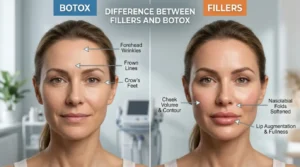
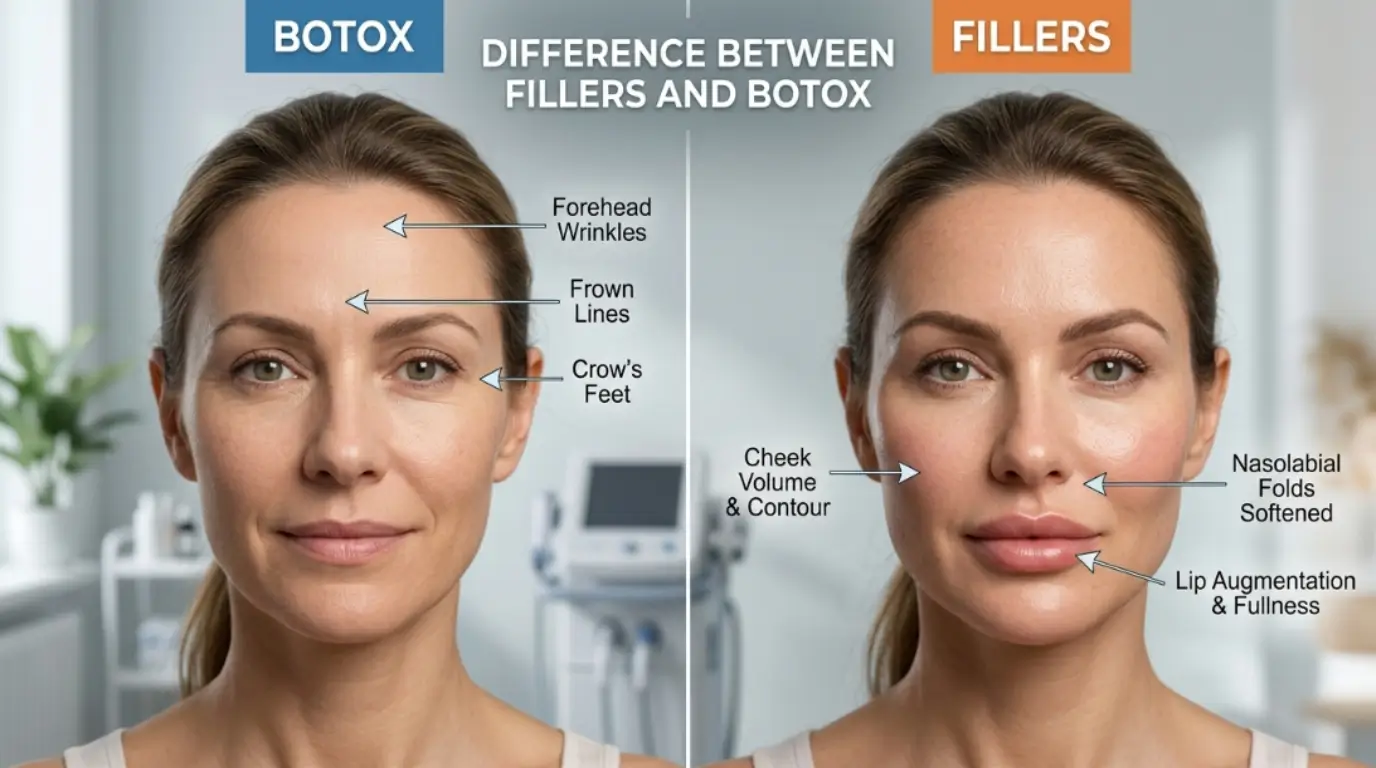
The main difference between fillers and Botox is their function. Botox relaxes muscles to reduce wrinkles caused by movement, while fillers add volume to smooth out lines and enhance facial features.
Why Understanding the Difference Matters
Knowing the difference between fillers and Botox is important for both beginners and professionals. It helps people choose the right treatment based on their needs. For example, someone with deep smile lines may need fillers, while someone with forehead wrinkles may benefit from Botox.
In society, these treatments are becoming common, and understanding them promotes safe and informed decisions. Experts also rely on this knowledge to deliver better results and avoid misuse.
Pronunciation (US & UK)
- Fillers
- US: /ˈfɪlərz/
- UK: /ˈfɪləz/
- Botox
- US: /ˈboʊtɑːks/
- UK: /ˈbəʊtɒks/
Now that you know the basics, let’s explore the detailed differences.
Difference Between Fillers and Botox (10 Key Points)
1. Function
Botox relaxes muscles. Fillers add volume.
- Example Botox: Reducing forehead lines
- Example Fillers: Plumping lips
2. Target Area
Botox works on dynamic wrinkles. Fillers work on static wrinkles.
- Botox: Crow’s feet
- Fillers: Nasolabial folds
3. Composition
Botox is a neurotoxin. Fillers are gel-like substances.
- Botox: Botulinum toxin
- Fillers: Hyaluronic acid
4. Results
Botox smooths lines. Fillers enhance shape.
- Botox: Smoother forehead
- Fillers: Fuller cheeks
5. Duration
Botox lasts 3–6 months. Fillers last 6–18 months.
- Botox: Temporary muscle relaxation
- Fillers: Longer volume effect
6. Procedure
Botox involves muscle injection. Fillers involve tissue filling.
- Botox: Small injections in muscles
- Fillers: Injected under skin
7. Pain Level
Both are mild, but fillers may feel heavier.
- Botox: Quick pinprick
- Fillers: Slight pressure
8. Cost
Botox is often cheaper per session. Fillers cost more.
- Botox: Per unit pricing
- Fillers: Per syringe pricing
9. Use Cases
Botox is for wrinkles. Fillers are for contouring.
- Botox: Frown lines
- Fillers: Jawline shaping
10. Risk
Both are safe but differ in risks.
- Botox: Temporary drooping
- Fillers: Swelling or lumps
Nature and Behaviour
Botox works by blocking nerve signals to muscles. It reduces movement, which softens wrinkles. Fillers, on the other hand, physically fill spaces under the skin, giving a plump and youthful look.
Why People Get Confused
People often confuse them because both are cosmetic injections used for anti-aging. Their results may look similar, but the methods are very different. Marketing and lack of knowledge also add to the confusion.
Table: Difference and Similarities
| Feature | Botox | Fillers | Similarity |
| Purpose | Relax muscles | Add volume | Both reduce aging signs |
| Duration | 3–6 months | 6–18 months | Temporary treatments |
| Method | Muscle injection | Skin filling | Non-surgical |
| Cost | Lower per session | Higher per session | Requires maintenance |
| Result | Smooth wrinkles | Fuller appearance | Improve facial look |
Which is Better in What Situation?
Botox is better for wrinkles caused by facial expressions, like forehead lines and crow’s feet. It works by relaxing muscles, making the skin look smoother.
Fillers are better for volume loss, like thin lips or hollow cheeks. They restore fullness and shape the face. The best choice depends on your specific need, not which one is “better.”
Metaphors and Similes
- Botox is like hitting the pause button on muscle movement
- Fillers are like adding cushions under the skin
Connotative Meaning
- Botox: Neutral to positive (youth, smoothness)
- Fillers: Positive (beauty, enhancement)
Examples:
- She used Botox to freeze her worries away
- Fillers gave her confidence a boost
Idioms or Expressions
- Smooth as Botox-treated skin
- Full of life like fresh fillers
Works in Literature
- Beauty and aging themes
- Genre: Non-fiction
- Writer: Nora Ephron
- Year: 2006
- Cosmetic culture discussions
- Genre: Essay
- Writer: Naomi Wolf
- Year: 1991
Movies Related to Beauty Treatments
- The Substance (2024, USA)
- Death Becomes Her (1992, USA)
FAQs
1. Are fillers and Botox the same?
No, they work differently. Botox relaxes muscles, fillers add volume.
2. Which lasts longer?
Fillers usually last longer than Botox.
3. Are both safe?
Yes, when done by professionals.
4. Can they be used together?
Yes, many people combine both for better results.
5. Which is more natural-looking?
Both can look natural if used correctly.
How Both Are Useful
Both treatments help improve confidence and appearance. They support self-care and modern beauty standards when used responsibly.
Final Words
Understanding the difference between fillers and Botox is key to making smart choices in skincare. While Botox helps relax muscles and smooth wrinkles, fillers restore volume and enhance facial features. Both serve different purposes but work together to improve appearance and confidence.
As cosmetic treatments become more common, knowing their differences ensures safe and effective results.
Whether you are a beginner or an expert, this knowledge helps you choose wisely and avoid confusion. In the end, the right choice depends on your needs, goals, and professional advice.